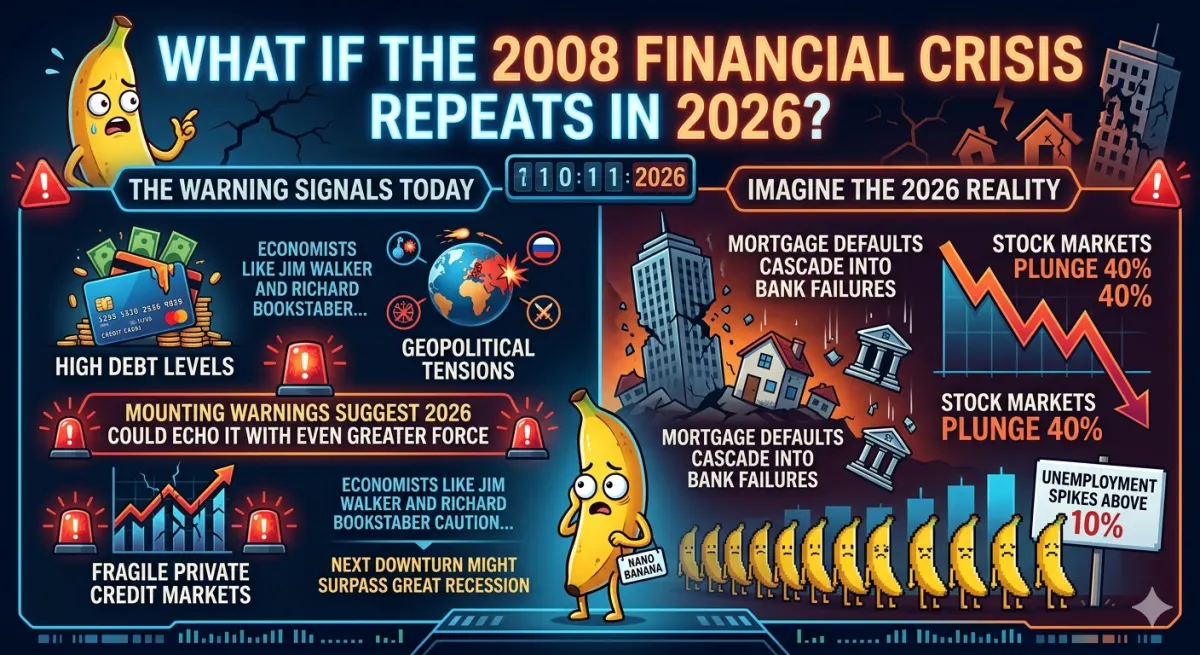
What Could Trigger a 2008-Style Crisis in 2026?
Unlike 2008's housing bubble, today's risks stem from a mix of sovereign debt, shadow banking, and global shocks. Real estate cycles are aligning with historical peaks, much like pre-2008, while Fed balance sheet reductions since 2022 have strained markets.
Key Warning Signs
- US debt-to-GDP exceeds 100%, higher than during World War II or the dot-com bubble.
- Private credit funds, like those from BlackRock and Morgan Stanley, face redemption freezes, echoing liquidity crunches.
- Geopolitical flare-ups, such as US tensions with Iran, threaten energy supplies and trade routes.
- Mortgage rates remain elevated post-2022 hikes, pressuring real estate valuations.
- Global trade momentum is fading, hitting export-heavy economies in Europe and Asia.
- Unemployment is rising gradually, mirroring the slow build-up before 2008's panic.
Experts note the Fed is already cutting rates and injecting liquidity, but lagged effects from prior tightening could overwhelm these efforts.
Historical Parallel: In 2008, banks entered well-capitalized but leverage unraveled quickly. Today, shadow banks hold trillions in illiquid loans with uncertain values.
Market Impacts: A Deeper Downturn?
A repeat crisis could amplify 2008's pain due to higher leverage and interconnected global finance. Stocks might shed more than the S&P 500's 40% drop, with private credit amplifying losses.
Hypothetical Market Scenarios
- Mild Recession: GDP contracts 2-3%, unemployment hits 8%; central banks intervene early.
- Severe Credit Crunch: Private credit implodes, freezing lending; markets fall 50%+.
- Geopolitical Shock: Energy prices surge 100%, tipping Europe into depression.
- Full Systemic Failure: Bank runs spread globally; governments bail out with trillions.
- Prolonged Stagnation: Inflation lingers at 5%, delaying recovery for years.
- US-Led Contagion: Treasury yields spike, forcing fiscal austerity worldwide.
Richard Bookstaber warns of compounding stressors, from private credit opacity to overreliance on institutional lenders. Crypto assets like SUI, currently at $0.9534 with +3.52% 24h change, could plummet 80% from all-time highs, mirroring broader risk-off moves.
$40TGlobal Private Credit Exposure (Hypothetical 2026 Peak)
15%Projected US Unemployment Spike
-60%S&P 500 Hypothetical Decline (Worse than 2008)
$2TEstimated Bailout Scale
Possible Outcomes and Global Ripples
Outcomes range from contained slowdowns to catastrophe. Europe faces debt stress tests without 2008's unity, while emerging markets like India might decouple somewhat.
Implications for Key Sectors
- Banking: Shadow banks fail first, traditional ones require mega-bailouts.
- Real Estate: Foreclosures rise 200%, valuations revert to 2022 lows.
- Consumers: Spending craters amid 10%+ unemployment and poverty surges.
- Tech/Crypto: High-beta assets like SUI drop to $0.20, wiping out retail investors.
- Energy: Supply shocks push oil to $150/barrel, fueling stagflation.
- Corporates: Defaults hit 10%, junk bonds yield 20%.
- Governments: Debt servicing costs double, sparking austerity protests.
Jim Walker predicts slowdowns in the US, Europe, and UK, with flat investments signaling weakness. Unlike 2008's coordinated response, today's fractured geopolitics could prolong the pain.
Investor Tip: Diversify into inflation-hedged assets like gold or TIPS now. Maintain 6-12 months cash reserves to weather liquidity droughts.
How to Prepare for the Worst-Case Scenario
Preparation beats prediction. Individuals and institutions should stress-test portfolios against 2008-plus shocks, prioritizing liquidity and low-leverage holdings.
What-If: Full 2008 Repeat + Geopolitical Wildcard
Markets crash 50% by Q4 2026. Fed slashes rates to zero, launches QE4. Recovery stalls until 2029 amid Iran conflict fallout. SUI hits $0.38 low, rebounding to $1.50 post-crisis.
Actionable Steps
- Reduce exposure to private credit and high-yield debt.
- Build cash buffers; avoid margin trading.
- Hedge with options or inverse ETFs on major indices.
- Focus on defensive sectors: utilities, healthcare, staples.
- Monitor Fed signals and unemployment data weekly.
- Geographic diversification: Favor Asia ex-China growth.
While recession odds seem low per some forecasts, unpredictable shocks loom large. A 2026 crisis might not mirror 2008 exactly, but its scars could run deeper given today's leverage.
Core Insight: History doesn't repeat, but it rhymes. Proactive resilience now could preserve wealth through turbulence.